Perfectly Served, Completely Hollow: What Happens When the Algorithm Finally Gets You Right

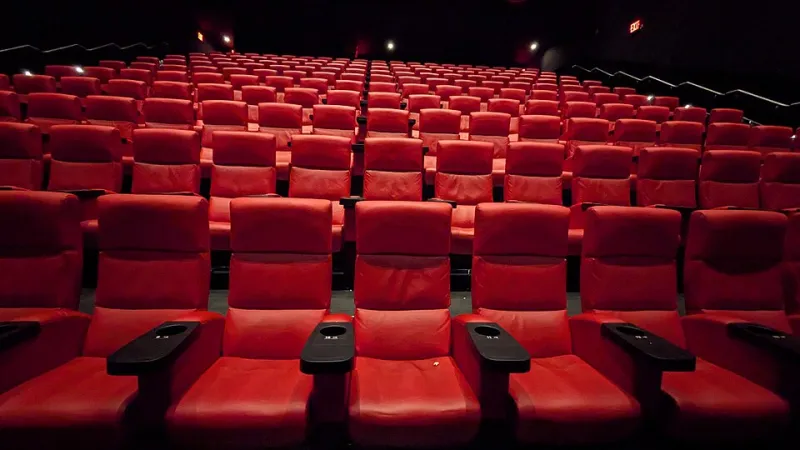
Photo by Photo by BoliviaInteligente on Unsplash on Unsplash
There's a specific kind of boredom that hits you mid-scroll. Not the restless kind, where you're looking for something to do. The other kind — the full kind. Where you've been fed content for forty minutes straight, every piece of it technically good, technically your taste, and you close the app feeling like you just ate a whole bag of chips without noticing. Satisfied in theory. Empty in practice.
That's not an accident. That's optimization doing exactly what it was built to do.
The Promise Was Real. That's What Makes This Weird.
Remember the old internet? Chronological feeds, random rabbit holes, stumbling onto a forum about competitive moss gardening at 2 a.m. because one hyperlink led to another. It was chaotic and inefficient and honestly kind of exhausting. The recommendation engine was supposed to fix that. Stop wasting your time on stuff you didn't care about. Give you more of what you loved.
And it worked. Spotify knows your taste better than most of your friends do. TikTok's For You Page figured you out in a weekend. YouTube's sidebar has your number. The machine got good at this — genuinely, impressively good.
But here's the thing nobody fully warned us about: a system optimized around your existing preferences can only ever give you a more refined version of what you already are. It can't give you what you haven't encountered yet. It has no mechanism for that. Discovery, real discovery, requires friction — and friction is exactly what personalization was designed to eliminate.
You Built the Echo Chamber Yourself (With Some Help)
We talk about echo chambers like they're something that happen to other people. Politically naive relatives, conspiracy forums, people who've clearly gone too far down some rabbit hole. But the preference echo chamber is quieter and way more universal.
Every time you watch something to completion, every time you like or save or rewatch, you're casting a vote. The algorithm tallies those votes and builds a model of you — a flattened, statistical version that captures your patterns but not your complexity. It knows you liked three documentaries about Cold War espionage, so it serves you a fourth. Then a fifth. By the sixth, you're not discovering anything. You're just confirming yourself.
The psychological term for what happens next is mere exposure effect in reverse. Normally, familiarity breeds liking. But past a certain threshold, familiarity breeds numbness. You stop registering the content as interesting because it no longer surprises the part of your brain that flags things as worth paying attention to. Everything starts to blur into a single, beige, frictionless experience.
You're not bored because the content is bad. You're bored because it's too specifically yours.
Optimization Is the Enemy of the Moment
Think about the last piece of culture that actually hit you. A song, a show, a video, a piece of writing. Something that felt genuinely alive. Chances are, you didn't find it because an algorithm served it to you on a silver platter. You found it because someone mentioned it offhand, or it showed up in a weird context, or you were looking for something else entirely.
Cultural moments — the kind that actually stick — almost always involve some element of accidental exposure. The record store employee who put on something you'd never have picked yourself. The friend who made you watch a movie you were sure you'd hate. The late-night TV performance that interrupted whatever you were half-watching. These moments work precisely because they bypass your stated preferences and hit something you didn't know was there.
Algorithms can't replicate that. They're not built to. Their entire architecture is backward-looking — trained on what you've already responded to, structurally incapable of accounting for what you haven't met yet. The result is a feed that's increasingly efficient at delivering the known and increasingly useless at generating the new.
And when culture loses its capacity to surprise you, it loses most of what makes it culture in the first place.
The Overfed Feeling Has a Name
Researchers studying recommendation systems have started using the term filter bubble fatigue to describe what happens when users become disengaged despite — or because of — highly accurate personalization. It's a documented phenomenon. The more precisely a platform caters to you, the more likely you are to eventually feel like you're consuming the same thing on a loop.
This isn't just a vibe. It has measurable effects on how people interact with content. Engagement metrics go up short-term when you nail personalization. But longer-term retention and satisfaction often plateau or drop, because users start to feel like the platform has nothing left to show them. They've been fully mapped. There's nowhere new to go.
The platforms know this, by the way. It's why you occasionally get the "try something different" prompt, or why Spotify drops a weird Daylist on you that doesn't quite fit any of your usual modes. They're attempting to introduce synthetic friction — the illusion of discovery within a still-controlled environment. It's better than nothing. It's also a little sad.
What You Actually Lose When Nothing Is Random
Here's the part that doesn't get talked about enough: genuine cultural literacy requires exposure to things outside your preferences. Not just adjacent things. Actually outside. Stuff you wouldn't have clicked on. Stuff that challenges your taste or expands it or straight-up confuses you for a minute before something clicks.
When your entire media diet is curated around confirmed preferences, you stop developing new ones. You stop building the kind of diverse cultural vocabulary that lets you make unexpected connections, appreciate things ironically, understand references from outside your bubble, or just have a conversation with someone whose taste is completely different from yours.
Personalization, taken to its logical extreme, is a form of cultural isolation. A very comfortable, very well-designed form of isolation — but isolation nonetheless.
Getting Back Some Friction on Purpose
None of this means you need to delete your accounts or swear off algorithmic platforms. That's not realistic, and honestly it's not necessary. But it does mean being intentional about creating pockets of unoptimized discovery in your media life.
Follow people whose taste you don't fully share. Read publications that cover things you don't already love. Ask friends for recommendations without telling them what you're in the mood for. Go somewhere — a bookstore, a record shop, a library — and pick something because the cover is interesting, not because a system told you it matches your profile.
The point isn't to be contrarian about algorithms. The point is to stay porous. To keep some part of your cultural intake open to the unexpected. Because the moments that actually change how you see things rarely arrive through the front door. They come in sideways, from angles you weren't watching.
The algorithm gave you everything you asked for. That's exactly the problem. You have to want things you don't know to ask for yet — and no recommendation engine on earth can do that part for you.