Drawing the Map Themselves: How Niche Communities Are Building Information Systems the Algorithm Can't Touch
There's a Discord server — you probably haven't heard of it, and that's entirely by design — where a few hundred people have spent the last two years cataloguing corners of the internet that recommendation engines can't seem to find. Not because the content is hidden, exactly. More because it doesn't perform well enough to surface on its own. No engagement spikes. No shareable thumbnails. Just dense, specific, genuinely useful material that the algorithm keeps quietly burying.
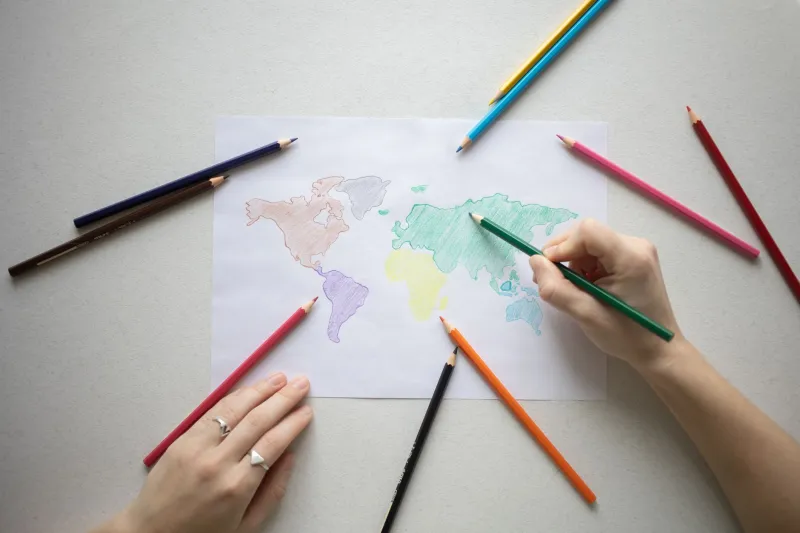
The people in that server built a pinned document. Then a second one. Then a whole nested folder structure that functions, at this point, like a hand-drawn atlas of a territory most people don't know exists.
This is happening everywhere, and it's worth paying attention to.
What Algorithmic Discovery Actually Broke
For a long time, the pitch was simple: let the machine learn what you like, and it'll bring you more of it. Personalization as convenience. And for casual browsing, sure, that works fine. But somewhere along the way, a specific kind of user — obsessive, research-oriented, deeply invested in a niche — started noticing what was missing.
The algorithm is optimized for retention, not comprehension. It wants you scrolling, not arriving somewhere. Those are fundamentally different goals, and the communities now building their own information systems understand that distinction at a gut level, even if they don't always articulate it that way.
What they're reacting to isn't just bad recommendations. It's the architecture of discovery itself — the assumption that finding things should be a passive experience, something that happens to you rather than something you do.
The Tools They're Using (And Why They're Weird)
The infrastructure these communities build is almost deliberately low-fi. We're talking:
- Hand-curated link aggregators running on tools like Are.na, Raindrop, or custom-built Notion databases shared with a small circle of trusted contributors
- Private Discord channels organized not by topic but by epistemic function — one channel for raw sources, another for contested claims, another for things that feel true but can't be verified yet
- Zines and newsletters that function less like publications and more like annotated bibliographies, with the curation being the content
- Old-school mailing lists that some groups have resurrected specifically because email doesn't have an algorithm
None of this is frictionless. That's the point. Friction is doing real work here — filtering for people who care enough to navigate it.
The philosophy underneath all of it shares a common thread: if you make the map too easy to read, the wrong people will use it, and the territory changes.
Gatekeeping, Rebranded
Here's where it gets complicated, because what these communities are doing looks a lot like gatekeeping — and in some ways, it is. There's a long, ugly history of gatekeeping in niche cultures, particularly in the US, where it tends to curdle into exclusivity for its own sake.
But the version happening now has a different flavor. It's less about protecting status and more about protecting signal quality. The concern isn't who gets in so much as what gets in. These communities are genuinely trying to solve an information problem, and access control is their primary tool.
The tension, though, is real. When you decide your community will manage its own information ecosystem, you're also deciding whose epistemology gets to shape it. That's a lot of power for a few hundred people in a Discord server, and the best communities seem at least vaguely aware of how easily that curdles.
Fragmentation as a Feature
Zoom out and what you're looking at is a kind of voluntary fragmentation — not the algorithmic fragmentation that happens to people, but a deliberate splintering that communities are choosing for themselves.
This has real cultural consequences. When the places where ideas actually develop are invisible to outside observers, cultural influence becomes harder to trace. A concept can travel from a private Discord server to mainstream discourse without anyone being able to reconstruct the path. The origin gets lost. The context gets lost with it.
That's not entirely bad. Some of the most durable ideas in American subculture have always developed in spaces that were invisible to the mainstream until they weren't. The difference now is scale and speed — and the fact that the tools for building these invisible spaces are more accessible than they've ever been.
Any sufficiently motivated group of people can now build a functional information ecosystem. The barrier isn't technical. It's mostly just the willingness to do the work.
What the Map Reveals About the Territory
Here's the thing about hand-drawn maps: they tell you as much about the mapmaker as they do about the terrain. The categories a community chooses, the sources it trusts, the questions it considers worth tracking — all of that is a portrait of collective values disguised as information architecture.
Which means these community-built systems are, in a weird way, more honest than algorithmic curation. The algorithm's values are obscured behind a recommendation interface. A pinned document in a Discord server is someone's actual judgment, legible and attributable.
That legibility is uncomfortable in its own way. It means the community has to own its choices. There's no machine to blame when the map turns out to be wrong.
Why This Matters Beyond the Niche
It's tempting to treat this as a story about extremely online people solving extremely online problems. But the underlying dynamic is broader than that.
As mainstream platforms get noisier and recommendation engines get more aggressive, more people — not just obsessives — are going to start asking whether they want to outsource their information diet entirely. The communities already building alternatives are essentially running pilot programs for a different relationship with knowledge distribution.
Some of those experiments will fail. Some will calcify into the exact kind of closed, self-referential systems they were trying to escape. But some will figure out something genuinely useful — a set of practices for managing collective attention that doesn't require surrendering the process to a black box.
The signal is already there. You just have to know where the map is.