Focused and For Sale: The Quiet Market Trading in What's Left of Your Concentration
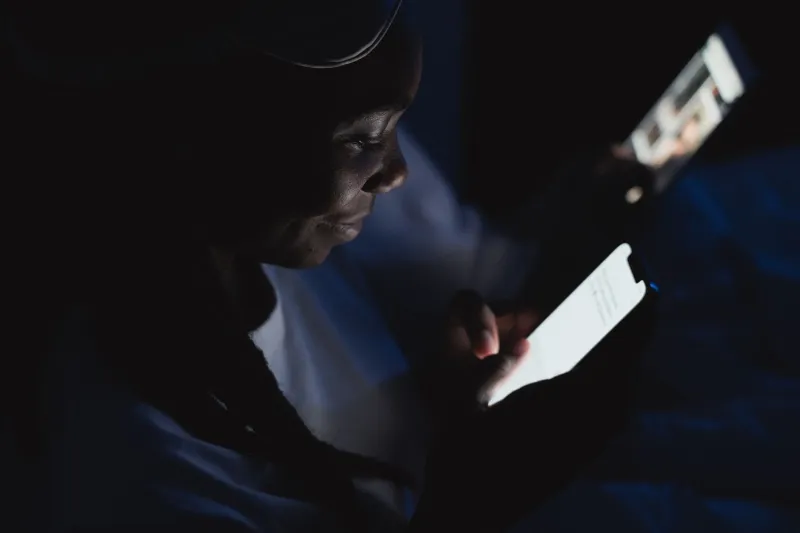
There's a number your phone knows about you that your bank doesn't. It's not your credit score. It's not your purchase history. It's the average number of seconds you spend on a piece of content before your eyes start to drift. That number — quiet, invisible, never shown to you directly — is worth more to the right buyer than most of what's sitting in your checking account.
We've talked about the attention economy in broad strokes for years. But something shifted recently. The conversation stopped being theoretical. Attention isn't just a metaphor for engagement anymore. It's being measured, modeled, segmented, and sold with the same precision that commodity traders apply to soybeans.
The Difference Between an Eyeball and a Brain
For most of the internet's commercial history, the unit of value was simple: the impression. Did your ad appear on a screen? Great. Did someone click it? Even better. The whole system was built around surface-level contact — eyeballs grazing content, fingers tapping reflexively.
That model is breaking down. Not because advertisers got ethical, but because they got smarter. Impression volume turned out to be a terrible proxy for actual influence. You can serve a billion ads to people who are mentally somewhere else entirely. The click-through rate on most display advertising is famously, almost comically, low — hovering somewhere around 0.1% across the industry.
What brands actually want — what they've always wanted, but couldn't measure — is genuine cognitive engagement. The moment when someone isn't just looking at something but processing it. That's the real asset. And now, thanks to a combination of behavioral tracking, eye-movement modeling, scroll-depth analysis, and session-duration data, it's becoming quantifiable in ways it never was before.
The industry term floating around research circles is "attentive impressions" — a metric that tries to distinguish between an ad that was technically displayed and one that was actually absorbed. Some platforms are already selling against it. The price difference is significant.
Scarcity Is the Point
Here's the uncomfortable math. Human attention is finite in a way that digital content is not. There are roughly 86,400 seconds in a day. Sleep takes a third of them. Work, commuting, eating — those take most of what's left. The slice of genuine, voluntary, undivided attention any one person has to give is surprisingly small.
Meanwhile, the volume of content competing for that attention has grown at a rate that makes the word "exponential" feel like an understatement. More video is uploaded to YouTube in a single day than a person could watch in several lifetimes. Substack newsletters multiply weekly. Short-form content platforms are essentially infinite scroll machines running 24 hours a day.
When supply explodes and capacity stays fixed, prices go up. That's not ideology — it's arithmetic. And the platforms, the advertisers, and increasingly the creators themselves are all recalibrating around the reality that a minute of someone's real attention is a genuinely scarce thing.
The Wealthy Opt-Out Is Already Happening
If you've noticed that premium services keep getting more expensive — and keep leaning harder into the "no ads" pitch — you're watching one end of this market form in real time.
The logic is straightforward once you see it. People with disposable income are paying to remove themselves from the attention marketplace. No tracking pixels. No retargeted ads following them around the web. No algorithmic nudges designed to keep them scrolling past the point where they actually wanted to stop. They're purchasing cognitive sovereignty, even if nobody's calling it that on the pricing page.
This isn't just about streaming services or premium news subscriptions. It extends into things like private browsing tools, paid VPNs marketed specifically around data minimization, and a growing category of productivity software that explicitly promises to limit distraction rather than manufacture it. There's a whole quiet industry emerging around the idea that your focus is worth protecting — and that protection costs money.
The people least able to pay for that protection are, by definition, the most exposed to the system designed to extract from them.
Creators Are Starting to Price It Too
The creator side of this equation is getting interesting in ways that don't get enough coverage. The most sophisticated operators in the independent content space have started thinking about attention not as something they're trying to grab, but as something they're asking their audience to invest — and structuring their work accordingly.
Long-form newsletters that take 20 minutes to read aren't competing with TikTok on TikTok's terms. They're making a different offer: give me your real focus for a longer stretch, and I'll give you something that actually requires it. The implicit contract is different, and so is the monetization. Readers who genuinely engage with something tend to convert to paid subscribers at higher rates. They refer other people. They stick around.
There's a version of creator strategy emerging that's less about maximizing reach and more about maximizing the depth of engagement per person reached. It's slower. It's less legible to the platforms that reward virality. But it builds something that's harder to disrupt — an audience that's actually paying attention, not just present.
The Tracking Layer Nobody Talks About
Under all of this is an infrastructure most people never see. The behavioral data being collected to model attention patterns is extraordinarily detailed. It's not just what you clicked — it's how long your cursor hovered before you clicked, whether you scrolled back up to reread something, how your engagement pattern changes at different times of day, whether you're the kind of person who reads to the end or bails at the second paragraph.
This data gets fed into systems that can predict, with uncomfortable accuracy, which kinds of content will hold your attention and which will lose it — and more importantly, which emotional or cognitive states make you most receptive to a commercial message. The goal isn't just to reach you. It's to reach you at the exact moment when your defenses are lowest.
Most people have a vague sense that this is happening. Very few understand the granularity of it.
What You Can Actually Do With This
Knowing the system exists doesn't automatically free you from it, but it does change how you engage with it. The first move is simply recognizing that every platform you use for free is running a calculation on your attention — and that calculation isn't neutral.
The second move is harder: getting deliberate about where your focus actually goes, rather than letting it get harvested by default. That might mean paid tools. It might mean structured time away from the feed. It might just mean being more conscious about the difference between content you sought out and content that was served to you.
The third move — the one most people skip — is understanding that if you create anything, your audience is making the same calculation. They're deciding whether what you're offering is worth the real cost of their attention. Not the click. The actual cognitive investment.
That's the economy we're actually operating in. The sooner you price it correctly, the better your position in it.