Stay Small, Win Big: The Secret Economy of Content Nobody's Supposed to Find Yet

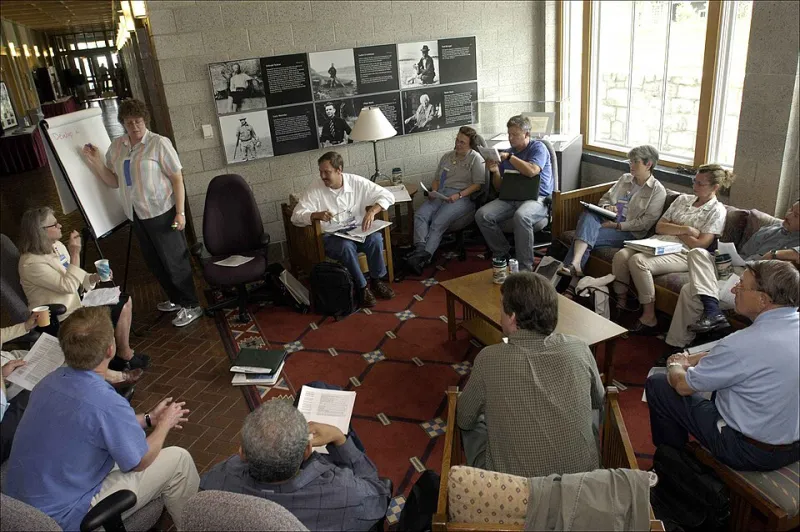
Photo by Photo by Kate Darmody on Unsplash on Unsplash
Somewhere between a Discord server with 200 members and a Substack that hasn't hit four figures yet, there's a specific kind of value being generated that almost nobody talks about openly. Partly because it's genuinely hard to explain. Mostly because explaining it would destroy it.
This is the attention arbitrage. And it's more deliberate than you'd think.
The Basic Idea (And Why It Sounds Wrong at First)
Arbitrage, in financial terms, means exploiting the gap between what something is worth in one market versus another. You buy low where nobody's looking and sell high where everyone already is. The attention economy works the same way, except the currency is trust, loyalty, and the kind of engaged audience that mainstream platforms spend millions trying to manufacture and never quite pull off.
Creators who understand this aren't just stumbling into small audiences and hoping for the best. Some of them — a growing number, honestly — are choosing obscurity as an opening position. They're building in the dark on purpose.
The logic goes something like this: a tight, self-selected community of a few hundred genuinely obsessed people is worth more, in almost every measurable way, than ten thousand passive followers who clicked because an algorithm served them something mid. Early audiences aren't just consumers. They're co-creators, evangelists, and the social proof that eventually makes the larger world pay attention.
Why Small Numbers Hit Different
There's a reason the most devoted fanbases almost always trace back to a time when the thing they loved was obscure. It's not nostalgia. It's math.
When a community is small, every member matters visibly. The creator actually responds to your comment. Your take shapes the direction of the work. You're not an audience member; you're a participant. That dynamic creates a density of engagement that simply cannot exist at scale. It's physics, not philosophy.
For creators, those early relationships are the foundation everything else gets built on. The people who found you when you had nothing are the ones who'll carry you when the algorithm finally blinks in your direction. They've got skin in the game. They want you to win because, in some small way, they helped make you.
For the people discovering the content, there's a different kind of value: identity. Finding something before it blows up is a form of cultural capital in the US internet landscape right now. It signals taste, attentiveness, and the willingness to dig. That's not nothing. Communities built around that shared experience of early discovery tend to be unusually cohesive.
The Economics of Strategic Invisibility
Here's where it gets uncomfortable for anyone who wants to treat this like a repeatable playbook.
The economic upside of staying small is real but fragile. An email list of 500 hyper-engaged readers in a specific niche can generate more revenue per subscriber — through direct sales, memberships, consulting leads, whatever — than a social media following of 50,000 people who half-remember why they followed you. Conversion rates in tight communities aren't just better. They're sometimes orders of magnitude better.
Brands that sponsor niche newsletters or podcasts before they pop are getting attention at a fraction of the cost they'd pay post-discovery. Investors and talent scouts who follow obscure creators early are buying options. If the creator takes off, they have a relationship nobody else has. If they don't, the cost was low anyway.
So yes, there are real incentives — financial ones — to stay quiet and let the value compound before anyone else shows up.
But here's the problem with trying to engineer it: the value only exists because it's authentic. The moment a creator starts performing obscurity, running small on purpose while secretly optimizing for virality behind the scenes, the community senses it. Maybe not immediately. But eventually. And when trust breaks in a tight community, it breaks completely.
The Optimization Trap
This is the part that should make any creator nervous.
The skills required to build something real in obscurity are almost entirely different from the skills required to scale it. In the early phase, you're rewarded for specificity, weirdness, genuine investment in a narrow thing that most people don't care about. You're rewarded for being actually yourself, because there's no audience large enough to perform for.
The second you start thinking about growth — real growth, not the organic kind — you start sanding down the edges. You make the thing more accessible. More shareable. More palatable to people who don't already get it. And in doing that, you gradually remove everything that made the early community feel like theirs.
This isn't a moral failing. It's a structural problem. Platforms are designed to push you toward optimization. Every dashboard, every analytics tool, every "here's how to grow faster" guide is pulling in the same direction. Resisting that pull while also trying to build something sustainable is genuinely hard, and most creators don't manage it.
The ones who do tend to have a very specific thing in common: they decided, early, what the work was actually for. Not in a vague mission-statement way. In a practical, daily-decision way. Is this for the 200 people who are already here? Or is this for the 200,000 who might show up someday? Those are different projects. You can't really run both at once.
What This Means If You're Not a Creator
If you're on the consuming end of this — just someone trying to find things worth paying attention to — the attention arbitrage is actually good news. It means the stuff worth finding is still out there, still findable, still weird and specific and made by people who care about it more than they care about their follower count.
You just have to be willing to go looking in places that don't look like much. The Substacks with no social proof. The podcasts with no production budget. The Discord servers that are half-dead at 2pm on a Tuesday. The newsletters that haven't figured out their header image yet.
That's where the signal is. It always has been. Eriodhef exists somewhere in that same register — a place that doesn't announce itself too loudly, because the people who'd get it don't need it announced.
The uncomfortable truth about attention arbitrage is that it only works when most people aren't doing it. Which means writing about it, in some small way, is already working against it. But that's the deal with signal and noise. You can't study it from the outside without changing it a little.
Find the thing before it gets found. Hold it lightly. Know that the holding is the point.